
Networks, Servers & Smart Technology
Server & Self-Hosted Services
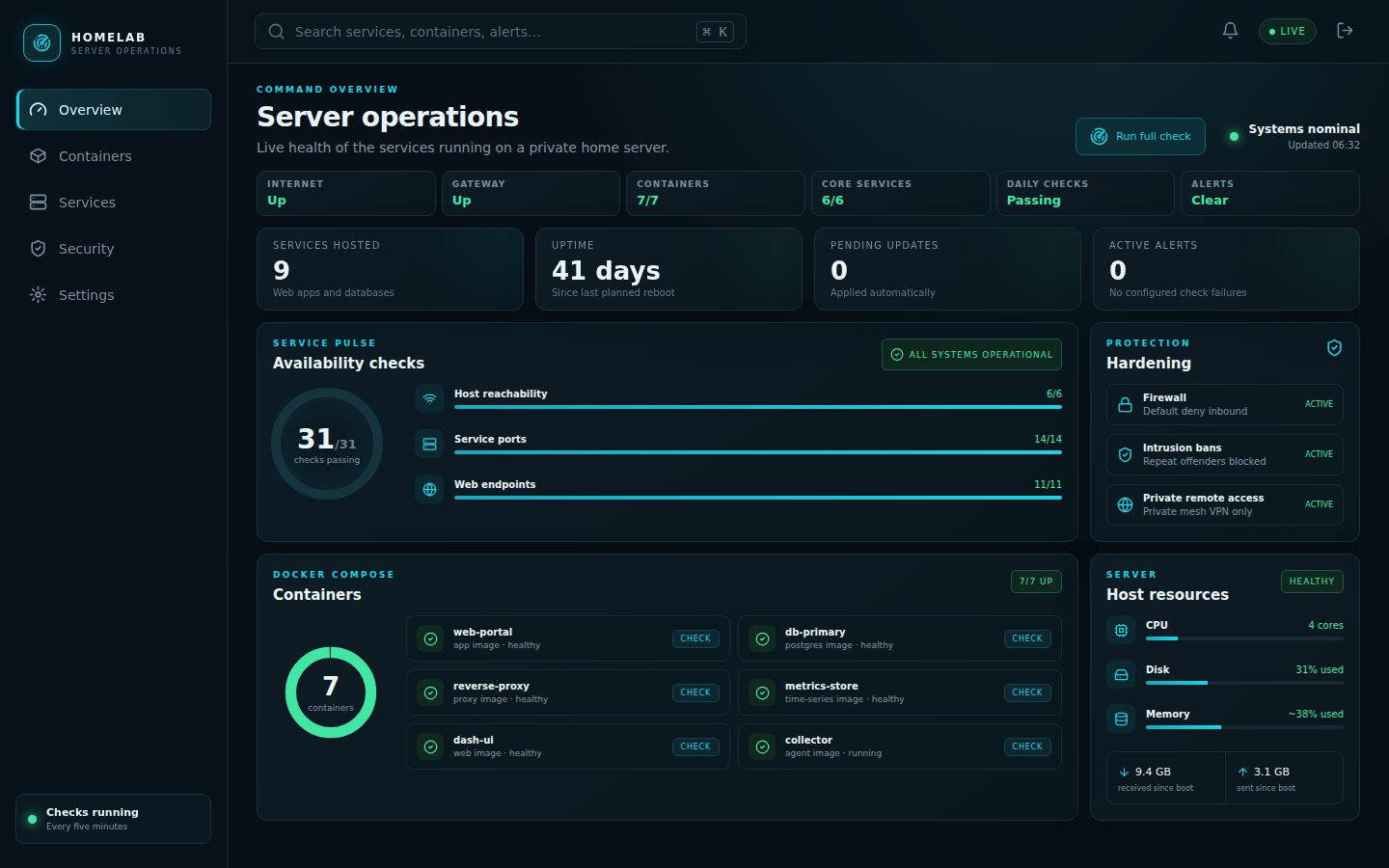
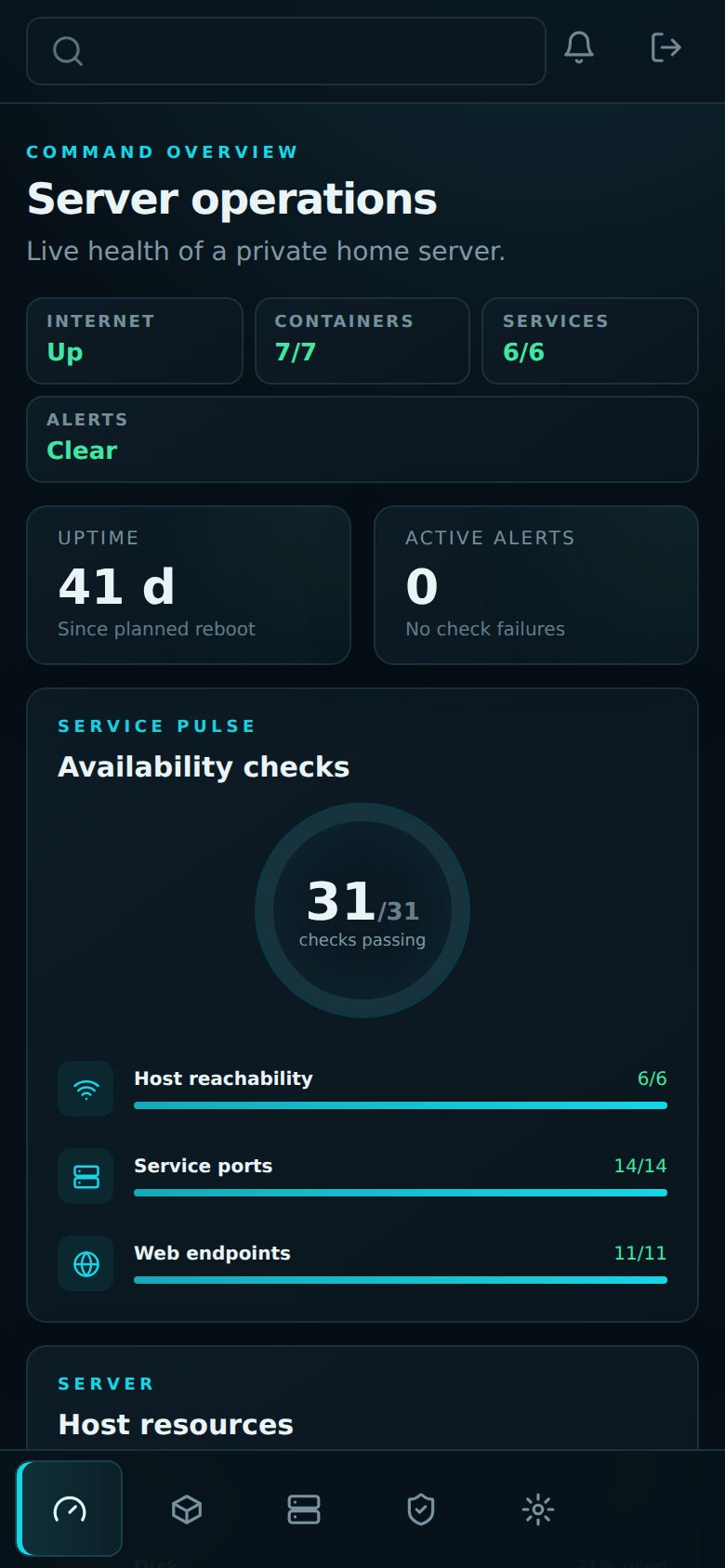
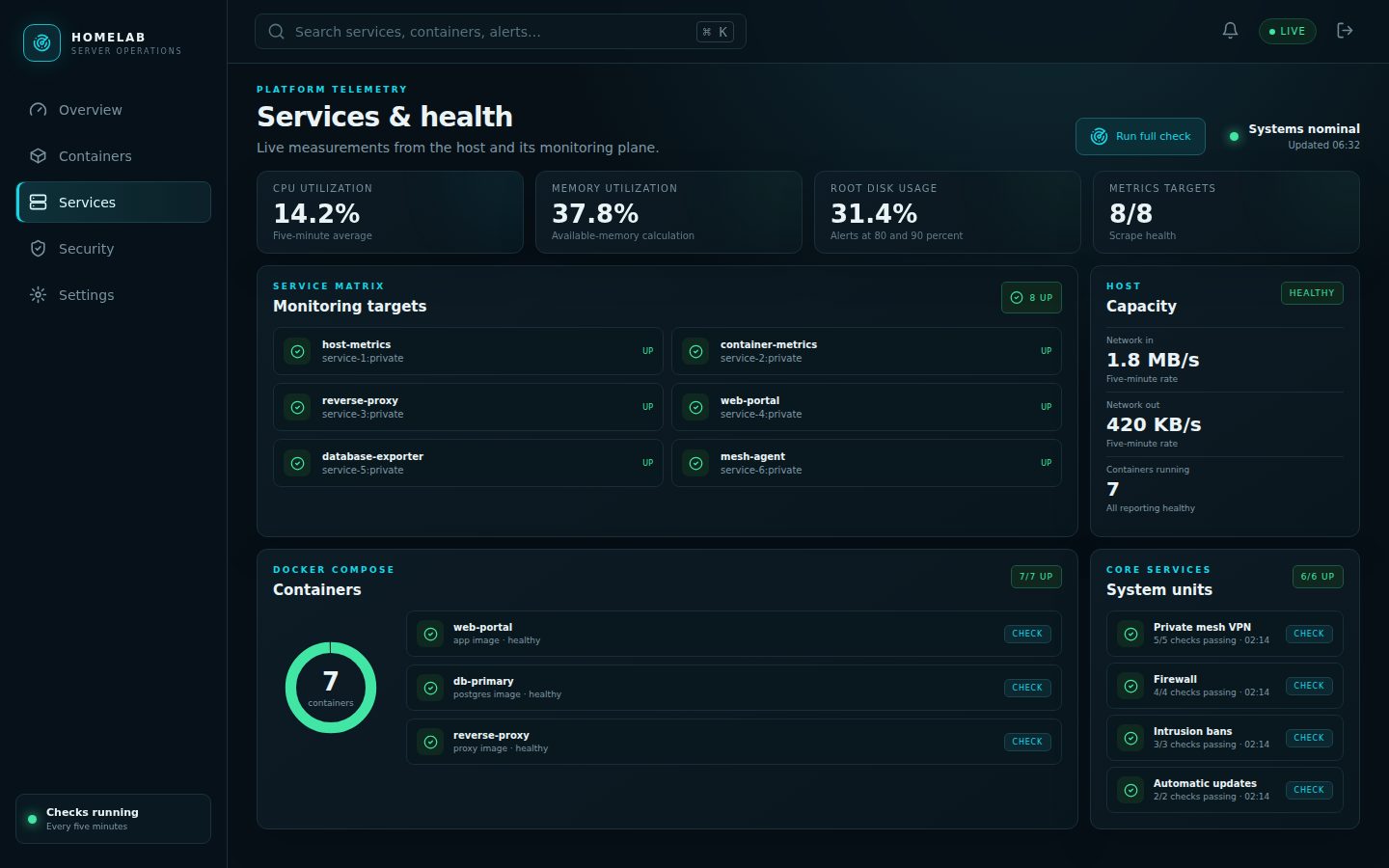
A Linux home server running many self-hosted web apps and containers as systemd services and Docker Compose stacks, reached privately over a mesh VPN, plus a separate cloud server hosting a few production apps.
The problem
Subscriptions add up, and data is scattered across other companies' clouds.
The solution
A Linux server running self-hosted applications with Docker Compose, a reverse proxy, private remote access and scheduled backups.
How it works
Services run in containers
A reverse proxy and private network control access
Logs and health checks watch them
Backups run on a schedule
What it does
Capabilities that have been built and checked.
- Services observed running: web apps, Postgres containers, Caddy, tailscaled, fail2ban, ufw enabled, unattended-upgrades
- Compose stacks for tech-it-easy and the network dashboard
- Cloud host usage documented in deploy docs
Still in progress
Honest about what isn't finished yet.
- Open WebUI: no evidence found
In real life
Real-world use
Runs the builder's own applications every day.
Results
No uptime figures are claimed.
Why it matters
- You own your data
- Predictable costs
- Secure remote access without opening the network
Built with
- Ubuntu 26.04 LTS
- systemd (system and user units)
- Docker and Docker Compose
- PostgreSQL 17
- Caddy reverse proxy
- Tailscale
- Cloudflare Tunnel (cloudflared)
- fail2ban
- ufw
- unattended-upgrades
- chrony
- cron
- Cloud VPS with Caddy for production apps
Want something like this?
Need a server or self-hosted setup? Tell me what you're trying to do and I'll tell you honestly what it would take.
Talk to me about it